From 6 April 2026, the tax free mileage rate for cars and vans went up from 45p to 55p a mile for the first 10,000 business miles. It’s the first rise since 2011, and it applies to the whole 2026/27 tax year.
If your team uses their own cars for work, here’s what you can pay them, how to work it out and what happens if you pay more or less.
Mileage allowance rates for 2026/27
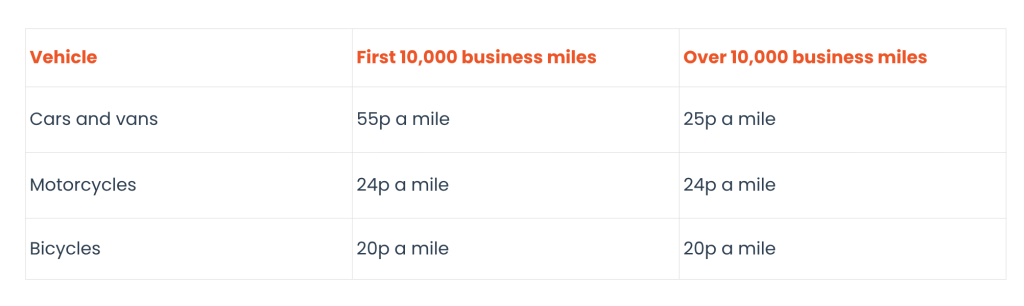
You can also pay an extra 5p a mile, tax free, for each colleague who travels with them on the same business journey.
What changed in April 2026?
The car and van rate for the first 10,000 miles rose by 10p, from 45p to 55p. It was announced in May 2026 and backdated to 6 April 2026, so if you paid 45p earlier in the tax year, you can top that up to 55p tax free. The 25p rate over 10,000 miles, and the rates for motorcycles, bicycles and passengers, all stayed the same.
How to work out the tax free amount
HMRC calls this the approved amount. Multiply each person’s business miles for the tax year by the right rate for their vehicle.
For example, if an employee drives 12,000 business miles in their own car this tax year:
10,000 miles at 55p = £5,500
2,000 miles at 25p = £500
Approved amount = £6,000
Pay up to £6,000 and there’s no tax, no National Insurance and nothing to report.
What if you pay more than the approved rate?
Anything above the approved amount is treated as taxable pay. You report the extra on the employee’s P11D, and you take Class 1 National Insurance on it through payroll.
For example, if you pay 60p a mile for 8,000 business miles, that’s £4,800. The approved amount is £4,400 (8,000 at 55p), so the extra £400 is taxable.
One detail catches people out: for National Insurance, there’s no drop to 25p after 10,000 miles. The higher rate applies to every business mile.
P11D reporting is changing. From April 2027, company cars, vans, fuel and private medical cover move onto payroll. Our payroll team can check you’re ready.
What if you pay less, or nothing at all?
If you pay less than the approved rate, your employee can claim tax relief on the difference. This is called Mileage Allowance Relief. They claim it through their Self Assessment tax return, or on a P87 form if they don’t file one. You don’t need to report anything.
Do electric cars get the same rate?
Yes, if the employee owns the car. Personal electric cars get the same 55p and 25p rates as petrol and diesel cars.
Company cars are different. If the business owns the car, you reimburse business fuel or charging using HMRC’s advisory fuel rates, which are reviewed every quarter. Check the latest rates on GOV.UK before you pay.
What records do you need to keep?
Ask your team to log every business journey with:
The date
The reason for the trip
The start and end address
The number of miles
Logs written at the time of each journey stand up far better if HMRC asks questions than ones pieced together at the end of the year.
Frequently asked questions
Frequently asked questions
Is 55p a mile tax free?
Yes, for the first 10,000 business miles in a car or van in the 2026/27 tax year. After 10,000 miles, the tax free rate is 25p.
Can company directors claim mileage?
Yes. Directors who use their own car for business journeys can be paid the same approved rates as employees, tax free.
Does my commute count as business mileage?
No. Normal travel between home and your usual workplace doesn’t count. Journeys to clients, suppliers or a temporary workplace usually do.
Can I backdate the new rate?
Yes. The 55p rate applies from 6 April 2026, so you can pay the difference for any business miles reimbursed at 45p since then.
Not sure your expenses policy is up to date? We’ll check your mileage rates, payroll set up and P11D reporting so nothing catches you out.